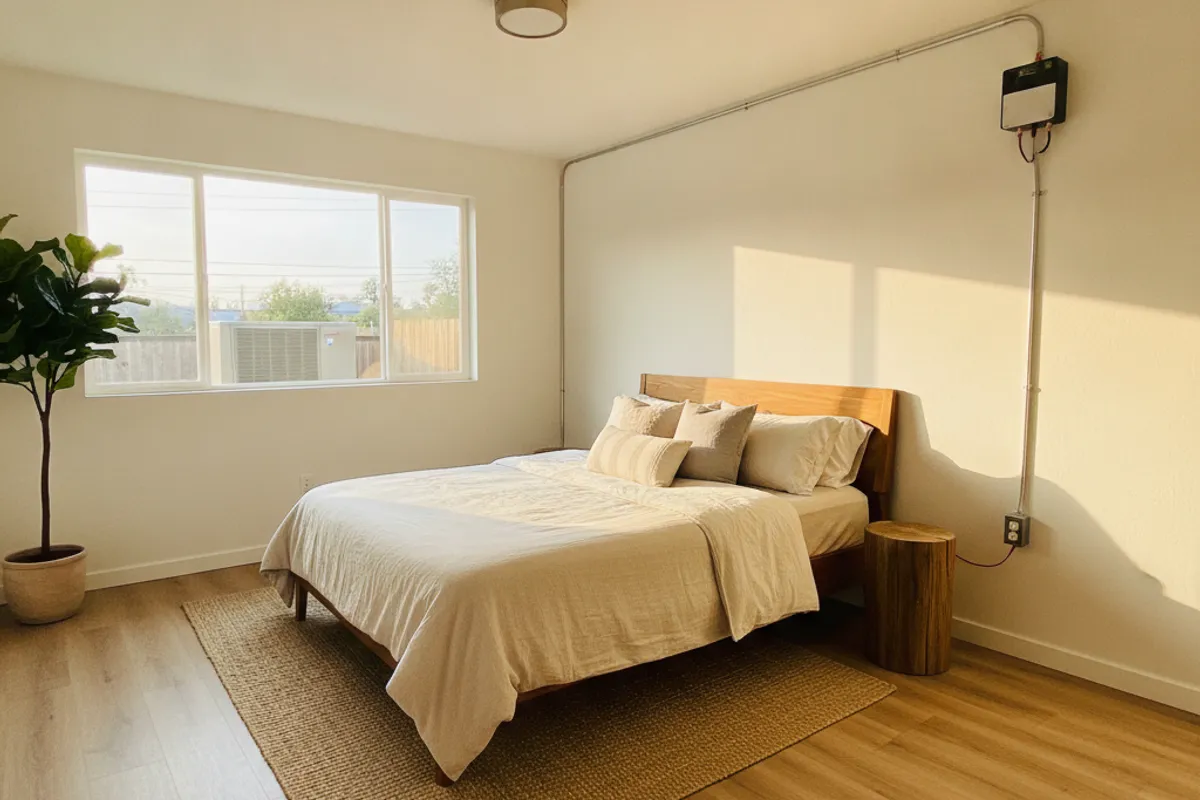
What a legal bedroom conversion requires
Converting a garage to a bedroom in San Diego sounds straightforward. The space is there. The walls are up. It seems like a matter of drywall, flooring, and a fresh coat of paint. In practice, a permitted, code-compliant garage-to-bedroom conversion in San Diego involves more than that, and understanding what the code actually requires helps you budget accurately and avoid surprises.
A bedroom under California’s Residential Code (which San Diego adopts with local amendments) must meet specific requirements that a garage does not currently satisfy. Meeting those requirements is the whole project.
Code-required exit window: the non-negotiable starting point
Every sleeping room needs emergency egress through a compliant window or exterior door. The permit plans must show how that opening meets current residential safety codes. Exact window dimensions come from approved project plans and current requirements. Confirm them with the local building department before ordering windows.
Most garages have no windows at all, or have high small windows that do not meet egress requirements. Adding an exit window means cutting a new opening, framing it, and installing a code-compliant window. This site does not publish a window-cut price. The licensed pro prices it from the wall, the exterior finish, and the approved opening.
The code-required exit window location matters practically as well. A window on the front wall of an attached garage faces the street or the front yard. A window on the side or rear wall typically provides more privacy. If the garage is attached and the side wall is close to the property line, a side window may not be possible; check setback requirements with your building department.
Subfloor and floor height
A garage slab is poured at or below grade, lower than the interior finished floor level of the house. When you walk from the house into the garage, you typically step down. Building a bedroom on that slab requires either raising the floor to match the house level or accepting a step-down entry into the room.
A sleeper-and-plywood subfloor system is the standard approach: treated 2x4 or 2x6 sleepers are laid on the slab, insulation is placed between them, and plywood sheathing is nailed over the top. This brings the floor up to the desired height, provides some insulation from the cold slab, and creates a surface ready for finish flooring. The system adds 3.5-5.5 inches of floor height depending on the lumber dimension used.
The licensed pro prices the sleeper system from the slab area and the height you need. This site does not publish a subfloor line-item.
A vapor barrier under or over the sleeper system is typically required in San Diego County’s coastal zones and recommended everywhere to prevent moisture from the slab wicking into the wood and finishes above.
Insulation to meet Title 24
California’s Title 24 Energy Code sets insulation requirements for habitable space. A garage was likely built with no insulation in the walls or ceiling, which does not meet residential energy code.
Exterior walls in a converted garage must meet current residential energy codes. Existing 2x4 framing can be opened, filled with batt insulation, and re-drywalled. The same approach works with 2x6 framing. Continuous rigid foam can instead cover the interior face before drywall is installed. This method avoids opening the framing but slightly reduces the room’s interior dimensions.
The ceiling assembly must also meet current residential energy codes. Coastal and inland San Diego sit in different climate zones. The required assembly therefore depends on the property and approved design.
A Title 24 compliance report is part of the permit package. It’s prepared for the specific property and lists the required insulation and window values.
HVAC
A bedroom needs heating. California Residential Code requires heating capable of maintaining 70°F at three feet above the floor. Cooling is not required by code but is a practical necessity in San Diego’s warmer months, particularly for inland locations in El Cajon, Santee, Lakeside, and Poway where summer temperatures can exceed 100°F.
A mini-split heat pump is the usual heating and cooling choice because it does not need new ductwork. This site does not publish mini-split install prices. The HVAC contractor sizes it from the approved plans.
If the house already has central HVAC and the garage is attached, extending a duct run into the new bedroom is sometimes possible. That evaluation requires an HVAC contractor to assess the existing system’s capacity.
Electrical
A bedroom conversion requires adequate electrical circuits. Minimum requirements include a dedicated 15A or 20A general lighting and outlet circuit, and depending on what other equipment is in the room, additional circuits may be needed. The existing garage circuit (typically 20A for a shop outlet) may not be in the right location or may be a circuit shared with other garage loads that is not appropriate for a bedroom.
Most conversions add new circuits, outlets, switches, and smoke and carbon monoxide detectors. This site does not publish an electrical line-item. The electrician prices it from the panel and the approved plans.
Putting it together: typical costs
The published market band for a garage-to-bedroom or living-space conversion is $40,000-$70,000 on the bedroom service page. That is a whole-job range, not a line-item quote from Garage Convert SD. Compare written scopes for permit, subfloor, window, insulation, HVAC, electrical, and finishes.
Working with an insured contractor
A garage-to-bedroom conversion that involves structural changes, plumbing, electrical, or HVAC requires a licensed general contractor in California. Verify any contractor’s license at cslb.ca.gov and confirm they carry liability insurance and workers’ compensation coverage before work starts.
To get connected with experienced, insured local crews who specialize in garage conversions across San Diego County, visit the garage conversion service page or call (858) 400-4935.
Does a garage bedroom need a closet to be called a bedroom?
California does not legally require a closet for a room to be called a bedroom. The code-required exit window, minimum square footage, and HVAC requirements are what matter to the building inspector. Some real estate contracts use closet presence informally, but building code does not mandate it.
Can I convert a garage to a bedroom without a permit in San Diego?
No. A change of occupancy from garage (storage) to bedroom (habitable) always requires a building permit in San Diego. Unpermitted conversions create disclosure liability, insurance complications, and retroactive legalization costs at resale.
How long does a garage-to-bedroom conversion take?
State law gives the agency 60 days to decide a completed application. Construction time after the permit is issued is listed on the service page as a planning band. This site does not publish a 2-4 month permit average.
Do I need to add a bathroom to convert a garage to a bedroom?
No. A bedroom does not require its own bathroom. The bedroom can share bathrooms with the rest of the house through the existing interior access. If you want a separate bathroom, that adds significant plumbing cost.
For full details on what a bedroom conversion involves, see our living space and bedroom conversion service page.