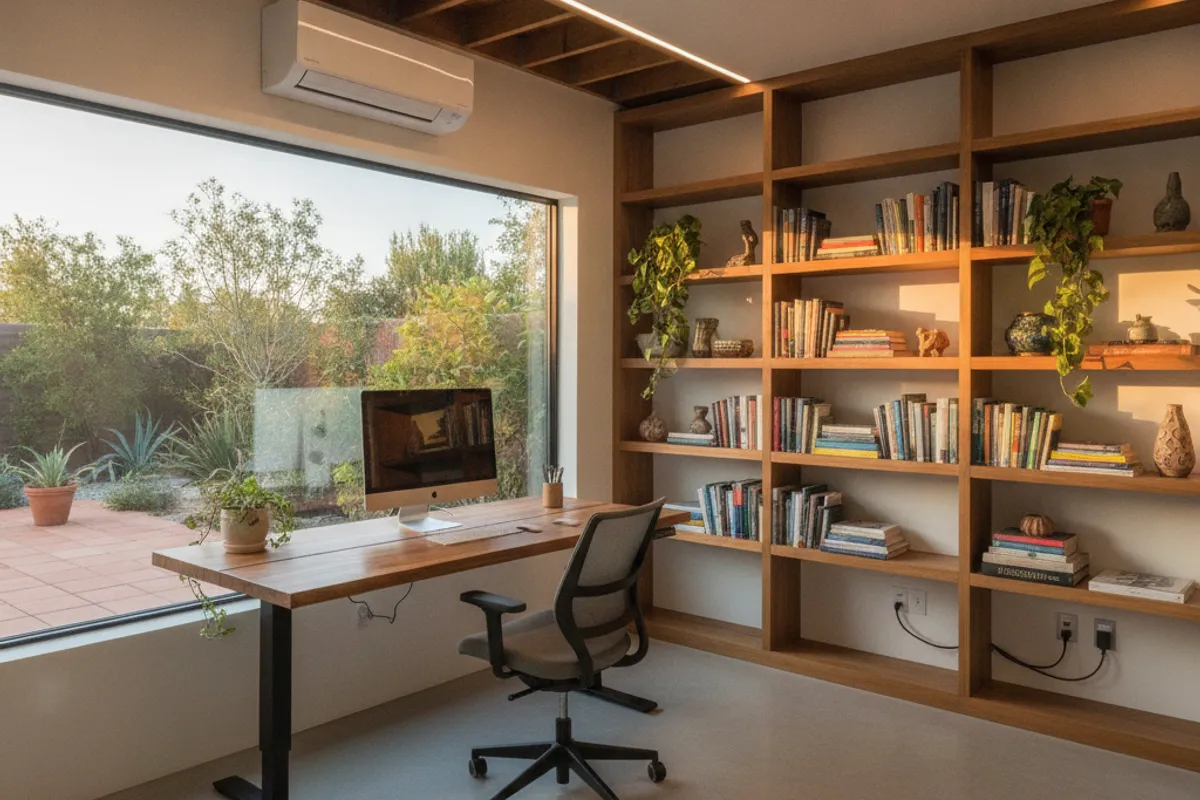
The home office and gym conversion: a different kind of project
A garage conversion to a home office or gym is a different project than a garage-to-ADU conversion in one important way: you are not necessarily creating a sleeping room or a rental unit, which changes the permit requirements, the cost, and what the space needs to function well.
That said, “less regulated” does not mean “no permit required.” The work involved typically still requires permits, and shortcuts in insulation and HVAC are what turn a promising renovation into a space that nobody actually uses.
Do you need a permit for a garage home office or gym conversion?
In San Diego, the permit requirement depends on what work is being done, not what you call the room.
If you are adding or moving electrical circuits, adding a dedicated HVAC system, modifying walls or the garage door opening, or making any changes to plumbing, a permit is required for those specific trades, regardless of what the finished space will be used for.
If you are only adding flooring and paint and minimal electrical (like a single outlet near an existing circuit), a permit may not be required. The threshold is whether the work constitutes a “change of occupancy” or involves regulated trade work.
For a home office with a desk and computer, a small window HVAC unit, and basic electrical, you may fall below the permit threshold. For a gym with a dedicated ventilation system, upgraded electrical for a sauna or electric vehicle charger, or structural flooring changes, a permit is likely needed.
The honest approach is to describe what you want to do to your local building department and ask directly. They will tell you what triggers a permit in your jurisdiction. San Diego’s Development Services Department has a public information line and in-person counter service.
What makes a garage work as a home office
Natural light. A garage door opening replaced with a large fixed window and a glass-panel door transforms the space from a cave to a place where you can actually think. The standard roll-up garage door opening is typically 9 feet wide, which allows for a substantial window-and-door combination. This single change makes more difference to usability than any amount of premium flooring or custom shelving.
Temperature control. San Diego’s climate is mild but not enough to skip HVAC in a closed garage. Inland cities run hotter. This site does not publish mini-split install prices. The licensed HVAC crew sizes the unit from the approved plans.
Sound separation. An attached garage shares walls with the main house, and without any insulation those walls transmit noise freely. If you are taking calls or recording anything, adding drywall with acoustic insulation on shared walls is worth the cost. Adding mass-loaded vinyl behind the drywall is an additional step for serious sound control.
Internet. A wired ethernet drop to the office is worth adding while walls are open, even if you plan to use Wi-Fi. Garage locations that are far from the router sometimes have poor signal, and a wired connection eliminates that variable for video calls.
Flooring. Concrete is cold, hard, and uncomfortable for long sitting sessions. Raised flooring on a sleeper system is the premium option. For a budget-conscious build, an interlocking rubber tile system (the same product used in commercial gyms) laid directly on the slab works well for a gym and is tolerable for an office with a fatigue mat under the desk.
What makes a garage work as a home gym
Flooring is the first investment. Rubber flooring protects the slab, cuts noise, and is comfortable to stand on. Interlocking tiles can sit on a clean, level slab. This site does not publish a per-square-foot rubber-tile price. The licensed pro prices the floor from the slab condition.
Ceiling height. Most San Diego garages from the 1970s-1990s have 8-foot ceilings, which is functional for most gym equipment. Pull-up bars and cable machines typically need at least 8 feet of clearance. If you want a power rack with the pull-up attachment, measure your ceiling before buying equipment; some racks require 9 feet.
Ventilation and HVAC. A gym generates heat. Inland San Diego garages without HVAC are hard to use in summer. A mini-split or a permitted exhaust setup is a job-specific choice. This site does not publish those install prices.
Electrical. A treadmill, rowing machine, or squat rack with an integrated monitor may require a dedicated 20A circuit. A future sauna will need a 240V circuit. Plan for more circuits than you think you need while the walls are open.
Mirrors. Large wall mirrors are standard in gym builds for form checking. The licensed pro prices the panels from the wall layout.
Typical costs for San Diego
Published market bands for an office or gym conversion live on the home office and gym service page and the cost hub. They are not a quote from Garage Convert SD. This post does not invent a cheaper unpermitted gym price. An unpermitted conversion is an occupancy and resale problem, not a budget product.
Getting the work done
For projects involving electrical, HVAC, or structural changes, verify the contractor’s license at cslb.ca.gov before work starts. For a referral to insured local contractors who handle garage conversions across San Diego County, see our home office and gym conversion service page or call (858) 400-4935.
Can I convert my garage to a home office without a permit in San Diego?
If the work involves only cosmetic changes (paint, flooring, shelving) with no electrical, plumbing, or HVAC work, a permit may not be required. Any trade work (new circuits, HVAC installation, structural changes) requires a permit. Confirm with your local building department.
What is the best HVAC system for a garage gym in San Diego?
A ductless mini-split is a common permitted choice because it heats and cools without existing ductwork. This site does not publish a BTU size for a two-car garage. The licensed HVAC pro sizes the equipment from the converted floor area, insulation, window orientation, and the products actually specified on the plans. The published electrical-and-HVAC market band is $8,000-$25,000 on the electrical and HVAC service page.
Does a garage home office add to my home’s value?
This site does not publish an appraisal multiplier, a rent comparison, or a home-value dollar for a garage office or gym. No .gov page in the claims ledger states those figures. Ask the licensed pro and, if you need a valuation number, a licensed appraiser working from the permitted plans.
How do I insulate a garage door opening when converting to an office?
The standard approach is to remove the garage door and its track hardware, frame in the opening with standard 2x4 or 2x6 framing, add a window for light, an exterior door for access, and insulate the new framed wall like any other exterior wall. This is permitted work in most San Diego jurisdictions.