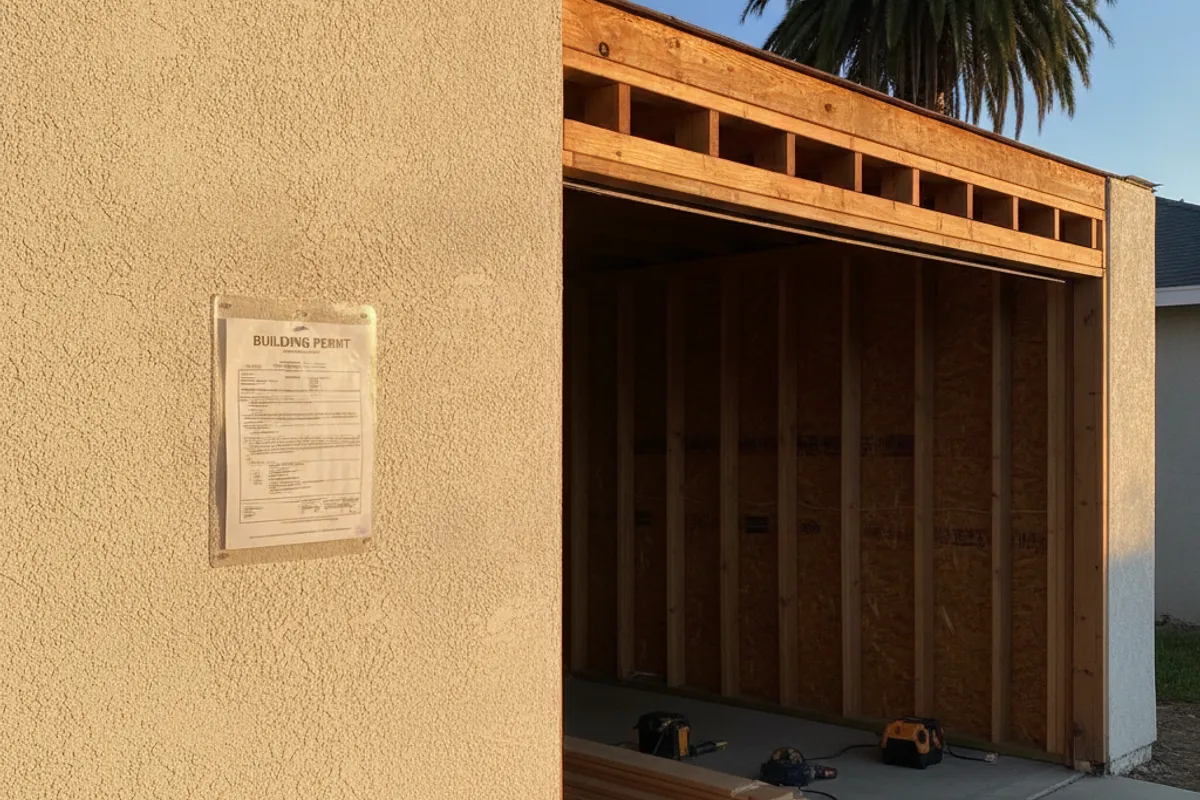
The short answer: yes, you need a permit
Converting a garage to living space in San Diego always requires a building permit. No exceptions apply to a project that converts a non-habitable structure into habitable space. The permit is what triggers the inspection process, and the inspection process is what produces the Certificate of Occupancy that makes the conversion legal to occupy or rent.
This holds whether you are converting to a bedroom, a home office, a gym, a rental unit, or anything else that involves insulation, drywall, and a change of occupancy from storage to habitable space.
City of San Diego Information Bulletin 142
People searching “garage conversion permit San Diego” often land first on the city’s own PDF: Development Services Information Bulletin 142, “Permit requirements for Residential Garage Conversions” (January 2016, form DS-5142). Read that bulletin. It is the city’s packet for converting a garage of a single dwelling unit or duplex to habitable, or other non-parking, space. It lists typical problems named in the bulletin: replacement parking when a required parking area is converted, setbacks, sleeping-room appliance rules, and historical review.
Treat it as a city bulletin, not as California ADU statute. Bulletin 142 still discusses replacing parking spaces eliminated by a conversion. For a garage converted to an accessory dwelling unit, Government Code §66314(d)(11) says the local agency shall not require those offstreet spaces be replaced. The City of San Diego lists a Beach Impact area exception outside transit priority zones. Confirm with Development Services which path your project is on, and whether that exception applies, before you treat Bulletin 142’s parking discussion as the last word on an ADU conversion.
The live bulletin is at sandiego.gov Information Bulletin 142. For the state parking rule, see our permits hub.
Why the permit matters beyond compliance
It is tempting to view the permit as a bureaucratic hurdle and the inspection as a formality. It is neither.
The inspections required during a garage conversion catch real problems. A framing inspection confirms that the structural changes made during the conversion meet current code. A rough electrical inspection confirms that the new circuits are properly sized and grounded before the walls are closed. A rough plumbing inspection confirms that drain slopes are correct and connections are watertight before the slab or framing covers them. A final inspection confirms that sleeping-room emergency openings, smoke and CO detectors, and HVAC work match the approved plans and current residential code. Exact opening sizes come from those plans, not from a blog.
These are not invented requirements. They reflect failure modes that happen in real conversions done without oversight.
Beyond safety, the permit has two practical consequences that affect you directly.
Resale disclosure. Unpermitted work is a problem at sale and occupancy. Confirm current disclosure and lending rules with qualified counsel and with any lender, not from this page.
Insurance. Ask your carrier how unpermitted work affects coverage. This site does not state a denial rule.
What the permit process involves
The specific process varies by jurisdiction. San Diego County has 18 incorporated cities, each with its own building department, plus unincorporated county areas served by the county’s Department of Planning and Development Services.
In the City of San Diego, ADU conversions are processed through the Development Services Department. The city has moved much of the process online through the Permits Portal at sandiego.gov/development-services. The typical sequence:
- Plans are prepared by a contractor or draftsperson showing the proposed conversion, including floor plan, window and door locations, electrical layout, plumbing, and a Title 24 energy compliance report.
- Plans are submitted to the city (online or over the counter). An initial completeness review confirms the submittal is ready for plan check.
- Plan check review against building, electrical, plumbing, mechanical, and energy codes. First-round comments are common. There is no honest published week-count that this site can quote as a City average.
- Corrections are addressed and a revised set of plans is submitted.
- Permit issuance. Once plans are approved and fees are paid, the permit card is issued and construction can begin.
- Inspections at framing, rough electrical, rough plumbing, insulation, and final.
- Certificate of Occupancy (or letter of completion for ADUs) is issued after the final inspection passes.
In other San Diego County cities, the process is similar but fee schedules and timelines differ. Chula Vista’s Development Services processes ADU permits through its ePlan system. Escondido, Santee, and El Cajon each have their own portals and fee structures. A contractor familiar with your specific jurisdiction will know what to expect and which plan checkers to follow up with.
What permits cost
Permit fees for garage conversions in San Diego County depend on the scope of work, the square footage, and the jurisdiction. The City charges plan-check and building-permit fees. School fees, if they apply, are set by the school district, not by this site. Impact fees follow Government Code §66311.5 and are not the whole bill. No contractor should invent a round permit total before checking the live fee schedule for the address.
School fees can still apply. They are set by the school district, not by this site, and they are not the same thing as the state impact-fee exemption. Confirm with the district that serves the property.
No reputable contractor will give you a permit fee number before researching the actual fee schedule for your jurisdiction and scope. If a quote comes back with a round-number permit estimate, ask how they arrived at it.
What happens if you skip the permit
Unpermitted garage conversions in San Diego do exist. They show up when homeowners sell the property, when an insurance claim is filed, or when a neighbor complains to the building department. The typical outcome:
Stop-work order. If work is discovered in progress without a permit, the city issues a stop-work order immediately.
Retroactive permit process. To legalize an unpermitted conversion, you go through a retroactive permit process. That can mean opening walls so framing and rough work can be inspected, correcting violations, and paying permit fees plus any penalty that jurisdiction sets.
Forced demolition in some cases. If code violations are severe enough and cannot be corrected without a full rebuild, the city can require the unpermitted work to be torn out.
The retroactive process is almost always more expensive and more disruptive than doing it right the first time.
How to verify your contractor pulls permits
Ask directly before signing a contract: “Will you pull the permit, and can I see the permit card before work starts?” Any legitimate contractor will pull the permit in their name or help you pull it in yours (owner-builder permit). The permit card should be posted at the job site.
You can verify that a permit has been issued for your address through the city’s online portal. In the City of San Diego, permit status is searchable at the Development Services portal.
To connect with insured local contractors who handle the permit process for garage conversions across San Diego County, visit the garage conversion service page or call (858) 400-4935. Always verify any contractor’s license at cslb.ca.gov.
Can I pull my own permit for a garage conversion in San Diego?
Yes, as an owner-builder, you can pull a permit in your own name. However, you then take on the liability for all work meeting code. Most homeowners work with a vetted contractor who pulls the permit in their name. Verify the contractor’s license at cslb.ca.gov before signing anything.
How long does a garage conversion permit take in San Diego?
State law gives the agency 60 days to decide a completed application. Incomplete packets sit outside that clock. This site does not publish a 4-8 month City average. Ask the licensed pro who files the packet what they are seeing on current jobs, in writing.
Will the city find out if my garage was converted without a permit?
Often, yes. Aerial imagery, listing photos, and neighbor complaints are all ways the city identifies unpermitted work. The more significant discovery point is resale, when a buyer’s inspector or lender identifies the unpermitted improvement.
Does a permitted garage conversion affect my property taxes?
Yes. A permitted conversion adds to the assessed value of the property, which increases property taxes. An unpermitted conversion does not change the assessment, but also does not qualify for the legal benefits of permitted habitable space.
For help navigating the permit and plans process, see our permits and plans service page.